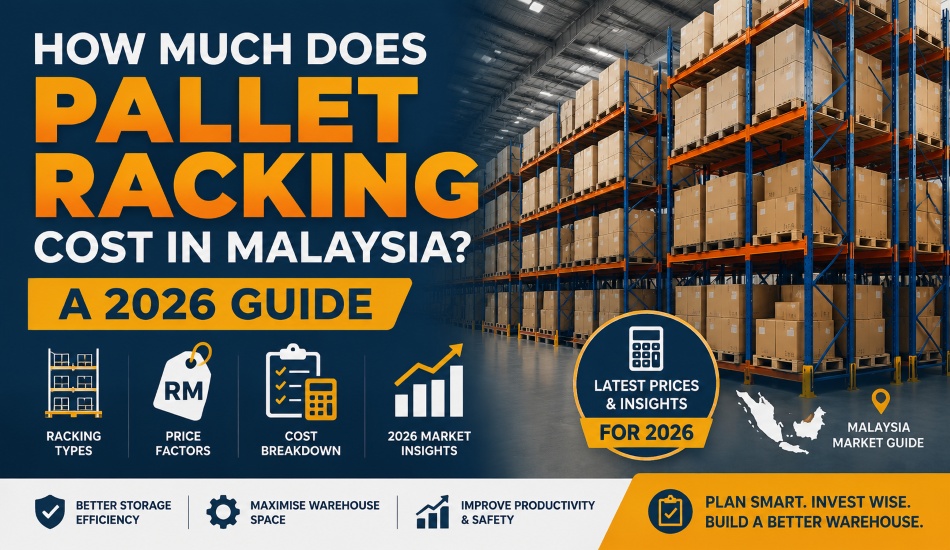
Pallet racking is one of the largest single investments in setting up a warehouse, and it is also one of the hardest to budget for. Ask three suppliers for a price, and you may get three very different numbers, because the cost depends less on the rack itself and more on what you are storing, how high you are going, and how you plan to move stock.
This guide sets out realistic price ranges for the Malaysian market, explains what pushes a project from one budget band to the next, and shows how to compare quotes so you are judging value rather than just the bottom line.
Pallet Racking Price Ranges in Malaysia
Most racking projects fall into one of three budget bands. These are indicative market ranges for 2026 and will vary with steel prices, specification, and site conditions.
Small systems: RM500 to RM5,000. Boltless racking or longspan shelving for light to medium goods. Suits small businesses, retail storerooms, workshops, and warehouses storing hand-loaded stock rather than palletised loads. Usually assembled without specialised equipment.
Medium systems: RM5,000 to RM50,000. Selective pallet racking and standard heavy-duty pallet racking. This is the most common band for Malaysian SMEs and mid-sized distribution operations that hold larger stock volumes and run forklifts. Most warehouse fit-outs land here.
Large and complex systems: RM50,000 to RM200,000 and above. Mezzanine racking, cantilever systems, high-density configurations such as drive-in or VNA, and large multi-bay installations. Cost rises with structural complexity, height, and engineering input.
Used racking is also widely available in Malaysia, with second-hand pallet racking commonly listed around RM500 per bay. It can be a sensible option for tight budgets, though it carries trade-offs covered further down.
What Actually Drives the Cost
Two warehouses of the same size can receive quotes that differ by tens of thousands of ringgit. Here is where the difference comes from.
System Type
The single biggest price driver. Selective pallet racking is the most economical because it is the simplest to engineer and install. High-density systems such as drive-in, double deep, and VNA cost more per position because they require more structural work, tighter tolerances, and often specialised forklifts. Mobile and automated systems sit higher again.
Our comparison of selective, double deep, VNA and drive-in racking explains which system suits which operation.
Load Capacity and Steel Gauge
A rack rated at 2,000kg per beam level costs more than one rated at 1,000kg, because higher ratings need thicker steel and more robust connectors. This is where cheaper quotes often cut corners, and where the saving becomes a safety risk.
Always compare quotes at the same load rating. A lower price for a lower rating is not a saving if the system cannot carry your heaviest pallets. Our heavy-duty rack load capacity guide explains how to work out what you need.
Height and Configuration
Taller uprights use more steel and may need additional bracing. Beam length matters too, since a bay designed for three pallets needs stronger beams than one designed for two. Going higher usually lowers your cost per pallet position, provided your ceiling height and forklift can support it.
Coating and Corrosion Protection
This matters more in Malaysia than most cost guides acknowledge. Humidity is hard on steel, and racking in damp environments, cold storage, or coastal facilities will deteriorate faster without proper protection. Galvanised or powder-coated finishes add to the initial cost but extend service life considerably. Treat it as part of the investment rather than an upgrade.
Safety Components
Column guards, rack protectors, safety mesh, beam locks, and load notice plates are sometimes excluded from headline quotes and added later. When comparing prices, check whether these are included. A quote that omits them is not cheaper, it is incomplete.
Installation and Site Conditions
Delivery, installation, floor condition, access restrictions, and removal of existing racking all affect the final figure. Sites with limited access, restricted working hours, or uneven floors take longer to install and cost more.
New or Used Racking?
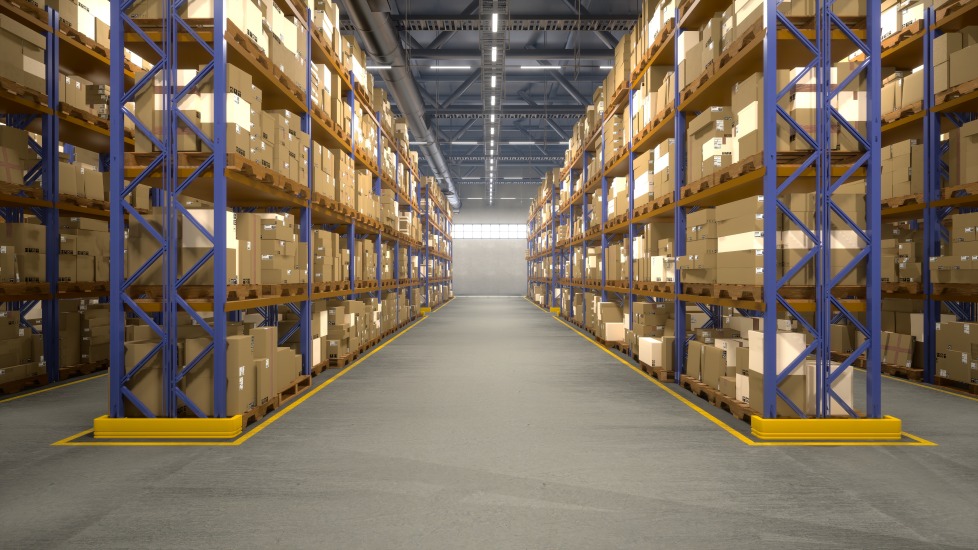
Used pallet racking is available across Malaysia and can cut initial cost significantly. It works best when you need standard configurations, have flexible timing, and can inspect the stock in person.
The trade-offs are real. Used racking rarely comes with load documentation, so you may not know its rated capacity. Components from different manufacturers are often not compatible, damaged uprights are common, and expanding the system later can be difficult if the profile is discontinued.
For light-duty storage or short-term needs, used racking can make sense. For a permanent warehouse handling heavy palletised loads, new racking with documented load ratings is usually the safer investment.
How to Compare Quotes Fairly
Price differences between suppliers often reflect different specifications rather than different value. Before comparing figures, check that each quote covers:
- The same load rating per beam level
- The same number of pallet positions, not just the same number of bays
- The same steel finish and corrosion protection
- Safety components, either included or listed separately
- Delivery and installation, or their exclusion
- Whether the supplier manufactures the racking or resells it
That last point affects both price and accountability. Buying directly from a manufacturer removes the middleman margin and gives you one party responsible for design, supply, and any adjustments needed later.
What to Send for an Accurate Quote
Ballpark ranges help with budgeting, but an accurate figure needs real data. Send your supplier:
- Pallet dimensions and heaviest pallet weight
- Number of pallet positions required
- Clear ceiling height and any obstructions
- Forklift type and aisle width available
- Photos of the space and any existing racking
- Project timing and whether old racking needs removal
The more accurate your inputs, the closer the quote will be to the final cost, and the less likely you are to face revisions once installation begins.
For a fuller checklist before you commit, see our guide on what to check before buying warehouse racking.
Getting the Right System for Your Budget
The cheapest quote is rarely the best value, and the most expensive is not automatically the safest. What matters is whether the system matches your load, your stock movement, and your building, with steel and protection suited to Malaysian conditions.
As a Malaysian racking manufacturer, EMT Systems designs and builds systems around real pallet profiles and site conditions rather than standard packages. If you are budgeting for a new warehouse, an upgrade, or an expansion, contact our team for a quote based on your actual requirements.
Frequently Asked Questions
How much does a pallet racking system cost in Malaysia?
Most projects fall between RM5,000 and RM50,000 for standard selective or heavy-duty pallet racking. Smaller boltless and longspan systems start around RM500, while mezzanine, cantilever, and high-density systems typically run from RM50,000 upwards.
Is used pallet racking worth buying?
It can be, for light-duty or short-term storage where budget is tight. The risks are unknown load ratings, incompatible components between manufacturers, and difficulty expanding later. For heavy palletised loads, new racking with documented capacity is usually safer.
Why do racking quotes vary so much?
Because they often specify different things. Load rating, steel gauge, height, coating, safety components, and installation all vary between suppliers. Compare specifications before comparing prices.
Does racking cost more for cold storage?
Yes. Cold storage and humid environments require corrosion-resistant finishes and sometimes different structural specifications, which increases cost but prevents premature deterioration.
Should I buy from a manufacturer or a distributor?
Buying from a manufacturer generally means better pricing, direct customisation, and a single point of accountability, since there is no reseller margin or handover between parties.